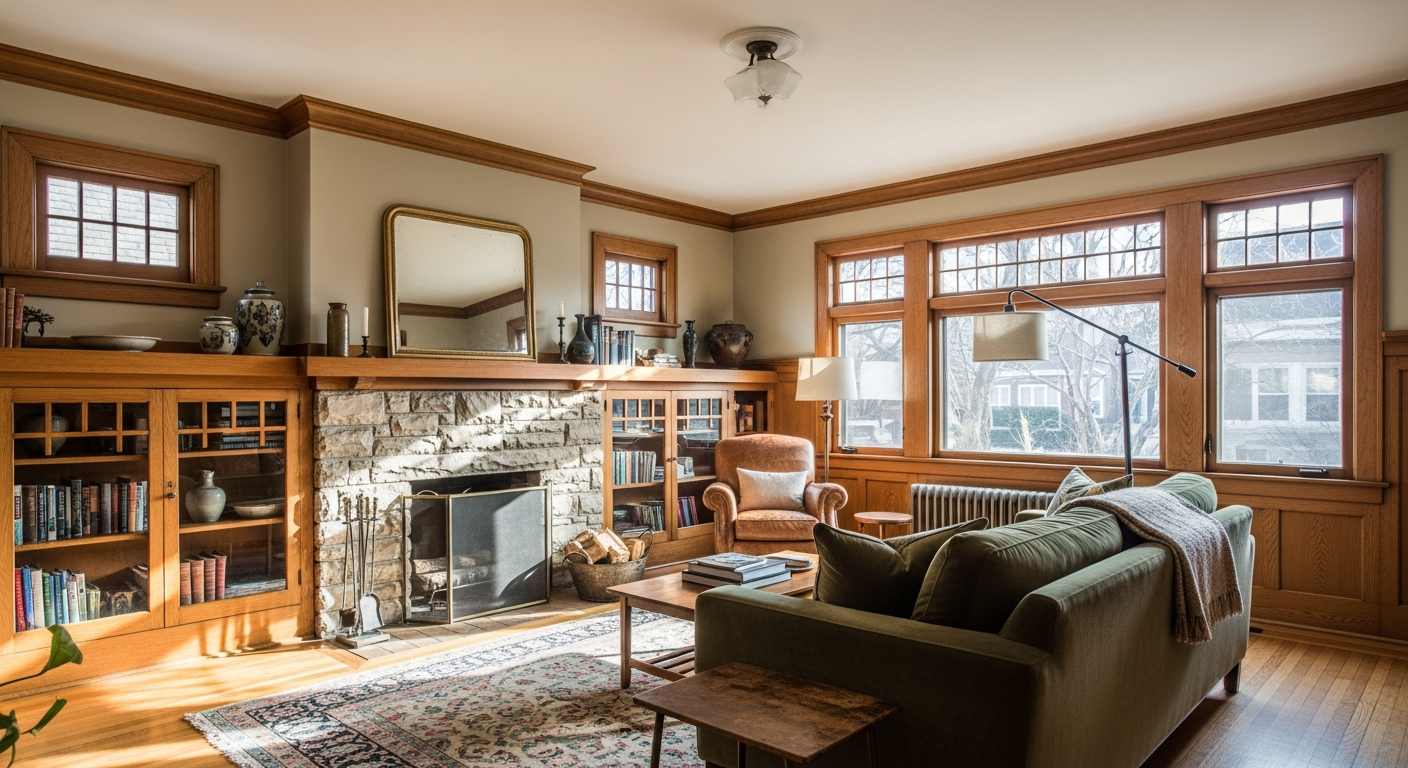
The Denver bungalow is one of the city's signature historic home styles, and it defines blocks across central Denver.
Built largely between the 1900s and the 1930s as Denver's streetcar suburbs grew, the Denver bungalow is a low, broad, Craftsman-influenced home built for the climate and the era. Today these homes anchor some of the city's most sought-after neighborhoods, from Washington Park to Berkeley, and they remain a favorite of buyers who want character, solid construction, and a connection to Denver's history. This guide covers what defines a Denver bungalow, where they are found, and what to know before buying or renovating one.
What defines a Denver bungalow
A Denver bungalow is typically a one or one-and-a-half story home with a low-pitched roof, broad overhanging eaves, exposed rafter tails, and a prominent front porch set under the main roofline. Brick is common, often with stucco or wood accents, and interiors feature built-in cabinetry, hardwood floors, and a central living and dining arrangement. The style draws on the national Craftsman and Arts and Crafts movements, adapted to Denver's brick-building tradition and high-altitude climate.
Many Denver bungalows include a partial basement and a detached garage off the alley, a layout that has made them well suited to modern pop-top and basement-finish renovations.
A short history
Denver's bungalows rose with the streetcar lines that extended the city outward in the early twentieth century. Neighborhoods like Washington Park, Platt Park, and Berkeley filled in with these homes between roughly 1905 and 1935, offering well-built, affordable houses for a growing city. Their durability and timeless design are why so many survive today, and why they are now protected in several historic districts.
Where to find Denver bungalows
Bungalows are concentrated in central and northwest Denver. Washington Park and the adjacent Platt Park hold some of the best-preserved examples, often on tree-lined blocks near the park and South Pearl Street. Berkeley, in northwest Denver near Tennyson Street, has a strong stock as well, along with Congress Park and parts of the Highlands. For the homes themselves and current listings, the neighborhood guides linked below cover each market in detail.
Buying and renovating a bungalow
Buyers drawn to bungalows should weigh original condition against the scope of any renovation. Many bungalows have been carefully restored, while others have been expanded with a pop-top second story or a finished basement to add space without losing the street-facing character. Key things to verify include the condition of the original systems, the quality of any addition, and whether the home sits within a historic district that has design guidelines. A local agent can help compare an original bungalow to a renovated one, since they price to different expectations.
Questions, answered
What is a Denver bungalow?
Where are Denver bungalows found?
Can you add on to a Denver bungalow?
Are Denver bungalows a good investment?
Denver luxury real estate specialist with Compass and author of four books on real estate and AI search. Ten-time Five Star Real Estate Agent, Certified Luxury Home Marketing Specialist with the Million Dollar Guild, and Denver Business Journal Forty Under 40 honoree. He hosts the television show Living the Denver Lifestyle, produced by the two-time Emmy-nominated Real Shows Network and set to air on HGTV. Rick Janson, 233 Clayton St, Denver, CO 80206. Telephone +1-303-589-2320. rickjanson.com